|
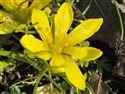
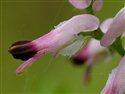
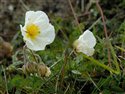
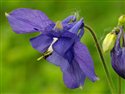
This website shows a collection of images of flowers I have built up
over the last ten years. The focus is now primarily on the wild flowers of Northern Europe but some cultivated
varieties are also featured. |
|
I have come to this via an interest in cultivation and wild flowers together with
photography and am not a trained botanist! In fact, the more I do of this the more amazed I am at the wealth of knowledge
held by true botanists - and also the rapid rate of expansion of the subject. |
|
Latin names - why ?
It has to be said their uniqueness is
invaluable - for web searching for using foreign books and other sources. I have endeavoured to include any
common names I can, particularly those quoted by the BSBI, and those are
indexed as well.
Note that some latin names I use may disagree with older books and floras from other countries - click here to find out why. |
|
There are of course many more comprehensive and better researched websites with
better photographs than this one (many not in English) - some I have found are listed on my
links page. |
|
I have listed the sources I use but, as ever the faults on this website are entirely
my responsibility. |
Indexing
FloralImages has quite a large collection of flower pictures - and it is growing. I have therefore tried to arrange
useful indexes. Indexes by Latin and Common names should be
self-explanatory. Just be aware that you can "short-cut" to the start letter with the links at the top of the page.
The family index is arranged in alphabetical order of Latin family names (with Latin
species names under each family). English family names are also given.
The "Native species" index is designed to cut out the garden cultivars featured on the
site and "escapes" found in the wild; which I do photograph as many are common and well-liked. |
|
Native or
introduced status
The plants / flowers are now classified as Native, Neophyte, Archeophyte or Casual Alien. Many have no accepted status. The allocations of plants to these categories should not be taken as definitive because it is quite difficult to determine with certainty whether or not a plant is Native. The status of some plants previously though of as Native e.g. Fritillaria meleagris (Fritillary) is now doubted by some botanists but that doubt is disputed by others.
A Native plant is one which has been growing in the area without being introduced by man usually for many thousands of years. It includes naturally occurring hybrids even if those have only recently been discovered.
An Archeophyte is an established plant believed to have been introduced by man before 1500 AD.
A Neophyte has been introduced and naturalised after 1500 AD.
A Casual alien is a plant which grows in an area without being planted but fails to establish itself in the wild for very long.
This classification comes from the very authoritative BSBI.
Of the remainder some are "known in the wild"
as established introductions or garden escapes. The remainder
are not known to thrive in the wild in this way and are classified as UK
Alien species (and so will normally be in FloralImages as examples from
cultivation).
Generally I have not taken the time to research whether anything growing in the wild is normally expected to be found where I saw it. I do try to indicate obvious / likely "garden escapes". But the status reported will generally just be that regarded as usual for the British Isles. |
Cultivars and variants
After a period of some uncertainly I have regularised the approach with regard to these. Flowers are now grouped by
their species (or maybe sub-species) name without regard to variants or garden cultivars. These attributes are
however quoted in the name beside each picture where they are known to apply. There is now a new
index of Cultivars and Variants to help in locating these. |
| |
Vice Counties - what are these ?
The location divisions I use are the botanical Vice Counties established in the mid 19th century and used ever since
for botanical recording. There are inevitably some anomalies compared to modern local government boundaries and the
larger counties are divided. For more information see the
BSBI website. I record grid references when I
take photographs and use the digital data from the
NBN to determine which Vice County
the photograph was taken in for the UK. For Ireland I have created my own reasonably accurate digital data to
determine West from Mid Cork etc. |
Images and copyright
The images are all mine except where otherwise indicated and I
reserve copyright on the images (and on behalf of those others whose photographs I have included) but the intention
is not to be unduly restrictive of their more general non-profit use.
What you can do without asking me
The Creative Commons Licence I apply to my images does allow you to download the images and use them unchanged in any way for personal private use - or for public display eg on a website but in the latter case you must provide a full acknowledgement and, on the web, a link back to Floralimages.
Please note this means no re-sizing / cropping at all. (Why?) |
|
Full printing-resolution versions of the images are usually available at appropriate cost for use in published
works. (I will normally grant non-exclusive world rights in such circumstances.)
More information for webmasters linking to FloralImages. |
Exceptions - free use of pictures for publication
I will supply my images free for use in promotional / signage material for nature reserves in the UK. (Note that not all pictures on the site are mine.) Also the wildlife trusts and organisations like the BSBI may
use my images for any published purpose in return for acknowledgement. |
Purchasing my images for commercial use. For almost all of the species featured in Floralimages the "best" pictures area available for purchase from Alamy and I will not normally supply these directly. A link is provided for direct access to the image at Alamy to the right of the picture. They are processed and checked to Alamy's rigorous standards and guaranteed blemish-free even when examined at 100%. Other images, particularly of leaves and other botanical features can be purchased directly from me at a lower price. These images are of a high standard and can be applied for via the "Enquiry / Feedback link to the right of the picture.
Note that some images, when first posted, may be in the process of submission to Alamy and not in fact available directly despite the lack of an Alamy link.
|
|
Guest images. I welcome images submitted for inclusion in
FloralImages if they will enhance the botanical range of the site. Please note though that, although the site does feature
plants from all over the world that are grown in European gardens, the scope of the site is restricted at present to
Northern Europe and the prime focus is on the native flora of that region.
I cannot include images of garden cultivars as guests.
For a picture to be considered as a guest you should have been able to identify it for genus and, in most cases,
species. Most guest images of plants and flowers should be listed in the BSBI database if they are to be
suitable for inclusion - certainly the genus should be.
By submitting your picture to FloralImages you will be assumed to be agreeing to the Creative Commons Licence I apply. This means that your image (as it appears on the Internet) may be used by others without asking as long as they do not alter it in any way and acknowledge its source as FloralImages. Additionally I also expect you to agree, as I do, to the BSBI using your images in their publications at the full resolution size you submit. Apart from this I will respect your copyright on your submitted images and any comment or request about your image will be passed on
to you by email. Please note, however, that protection of copyright in an absolute sense is impossible on the
Internet - so if you find your image being used without your consent I cannot be held liable and I accept images on
this understanding.
Please submit pictures as high quality JPEG files of greater than 2000 pixels width / height.
Please indicate a) the photographer and b) the person who identified the
plant / flower. |
|
Seed sources for cultivated flowers |
Much of my seed comes (legitimately) from botanic gardens and collections organised
by them. A valuable source for some years was the Seed Guild, now sadly defunct, that distributed seed from
Botanic gardens around to world to interested members. I took seed from 1977 to 2002 from this source - both from
the general list (where seed was distributed on a lottery basis) and from collection trips made by botanists in
Tuva (1997), Sikhote (1998) and Kazakhstan (1999) - all in Asia.
Finally I also buy seed from Chiltern Seeds and have done so for
many years. All of these sources are noted with the pictures - where I can remember / decipher my notes / labels ! |
Mosses, Lichens and Fungi
I have started to include these but must warn that I cannot identify many of them reliably. Any assistance would be
gratefully accepted and acknowledged - but I have to concentrate for now on getting my vascular plant identification
up to scratch. |
|
Sources |
|
The Illustrated Flora of Britain and Northern Europe, Blamey and Grey-Wilson, 1989 (a superb book) |
|
The Trees of Britain and Northern Europe, Mitchell and Wilkinson, 1982 |
|
The Wild Flower Key. Francis Rose |
|
C. Stace, New Flora of the British Isles, Cambridge University Press. My edition is 2, 1997 but I think that may not be the latest. |
|
BSBI database - available at www.bsbi.org.uk. |
| I also search out names on the web looking for corroboration of my hunches. Some of the sites I have found
most useful are on my links page. |
|
Acknowledgments |
For several years I walked regularly in the Mendips and went on guided walks organised by the local
Somerset Wildlife Trust and I am indebted to the many Trust members who have helped me recognise many of
the plants and flowers. It is amazing a) how much they know and b) how many common plants that I may have heard of I
still cannot reliably identify myself.
Now I walk regularly in the Welsh borders (and further afield from time to time) and am becoming similarly indebted to the knowledgeable members of the Radnorshire and Breconshire Wildlife Trusts.
I also attend BSBI field meetings - where the level of expertise is usually overwhelmingly impressive.
Many people are now helping FloralImages by sending in comments pointing out my gaffes or helping with my uncertain
IDs. Many thanks to all - they are acknowledged on individual flower pages where appropriate. |
Contact details
John Crellin |
Floral Images, Hay-on-Wye, UK
|